Fei Song
Postdoctoral Researcher
Shanghai Jiao Tong University, Shanghai, China
Advisor: Prof. Ruyuan Zhang
Email: songfei20160903@gmail.com
Google Scholar GitHub
Bio
I received my Ph.D. from the Shenyang Institute of Automation, Chinese Academy of Sciences. During my doctoral studies, I was advised by Prof. Bailu Si, who moved to Beijing Normal University during my Ph.D. period.
My research broadly focuses on spatial cognition, planning, and computational modeling, exploring how insights from biological intelligence can inspire principles for artificial intelligence. I am particularly interested in the mechanisms underlying spatial navigation, goal-directed behavior, and planning, and have previously developed computational models and algorithmic frameworks for physical-space navigation and path planning.
I am currently a Postdoctoral Researcher in the School of Psychology at Shanghai Jiao Tong University, where I work with Prof. Ruyuan Zhang. My current research focuses on human cognition and planning, aiming to bridge computational algorithms with cognitive theories to better understand the representational and inferential processes that underlie intelligent behavior.
News
- [10/2025] Our collaborative work 📐 The Principle of Isomorphism: A Theory of Population Activity in Grid Cells and Beyond 🧩 is now available on arXiv.
- [08/2025] I officially started my postdoctoral research position at the School of Psychology, Shanghai Jiao Tong University, joining Prof. Ruyuan Zhang’s research group.
- [06/2025] I successfully obtained my Ph.D. degree! 🎓 I am deeply grateful for the rigorous academic training at the Shenyang Institute of Automation, and for the inspiring research atmosphere at the School of Systems Science, Beijing Normal University, both of which shaped my doctoral journey. A heartfelt thanks to my mentor, Prof. Bailu Si 🙏, for his guidance, encouragement, and long-term support. I also cherish all the wonderful friends, collaborators, and labmates I met at BNU 🤝🌟 — our discussions, shared ideas, and the time we spent together made these years truly memorable.
- [05/2025] Our work 🤖 An Improved Artificial Potential Field Method with Distributed Representation and Scale-Invariant Path Planning 🔍 has been accepted by IEEE Transactions on Cognitive and Developmental Systems.
- [04/2025] Our paper 🧭 A hippocampal navigation model through hierarchical memory organization 🧠 has been accepted in Cognitive Neurodynamics.
Publications
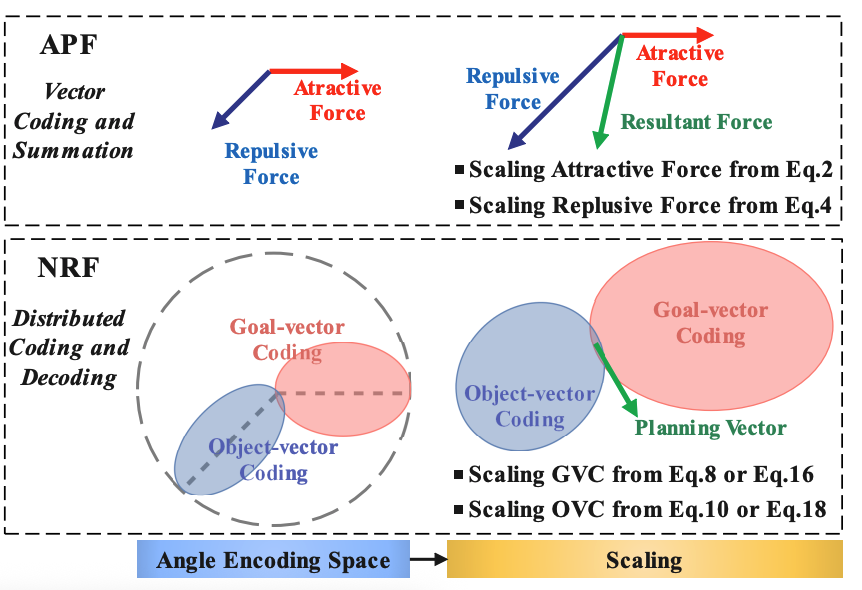
Fei Song, Yuxiu Shao, Dengyao Jiang, Ziyu Ren, Fengzhen Tang, Yandong Tang, Bailu Si
Cite:
An Improved Artificial Potential Field Method with Distributed Representation and Scale-Invariant Path Planning
@ARTICLE{11091598,
  author={Song, Fei and Shao, Yuxiu and Jiang, Dengyao and Ren, Ziyu and Tang, Fengzhen and Tang, Yandong and Si, Bailu},
  journal={IEEE Transactions on Cognitive and Developmental Systems},
  title={An Improved Artificial Potential Field Method with Distributed Representation and Scale-Invariant Path Planning},
  year={2025},
  volume={},
  number={},
  pages={1-15},
  keywords={Force;Vectors;Encoding;Path planning;Neurons;Heuristic algorithms;Artificial intelligence;Silicon;Planning;Tuning;Path planning;Navigation;Artificial Potential Field Method;Distributed Representation;Brain-inspired Algorithm},
  doi={10.1109/TCDS.2025.3592082}
}
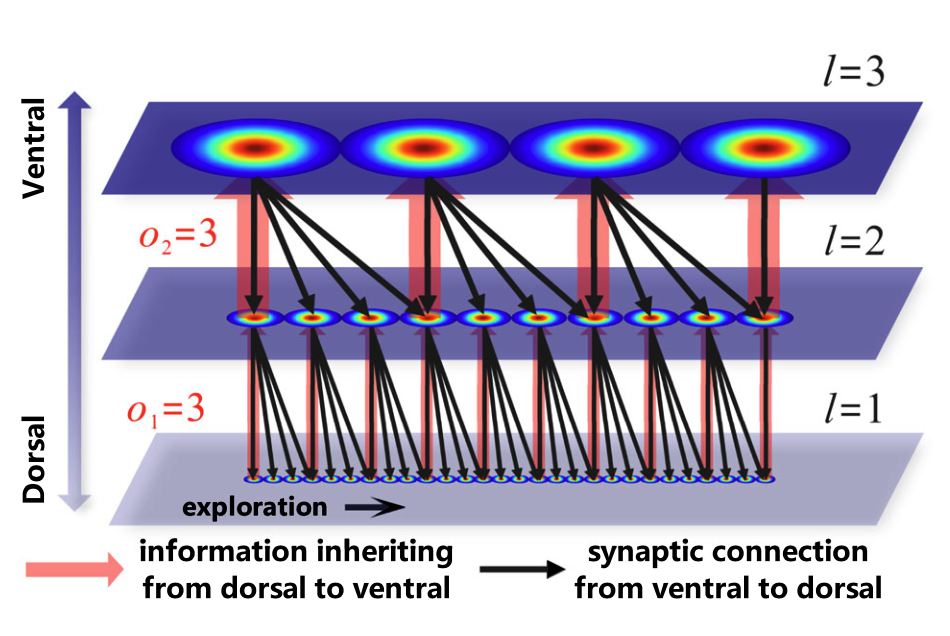
Fei Song, Jinyu Li, Fenzhen Tang, Yandong Tang, Bailu Si
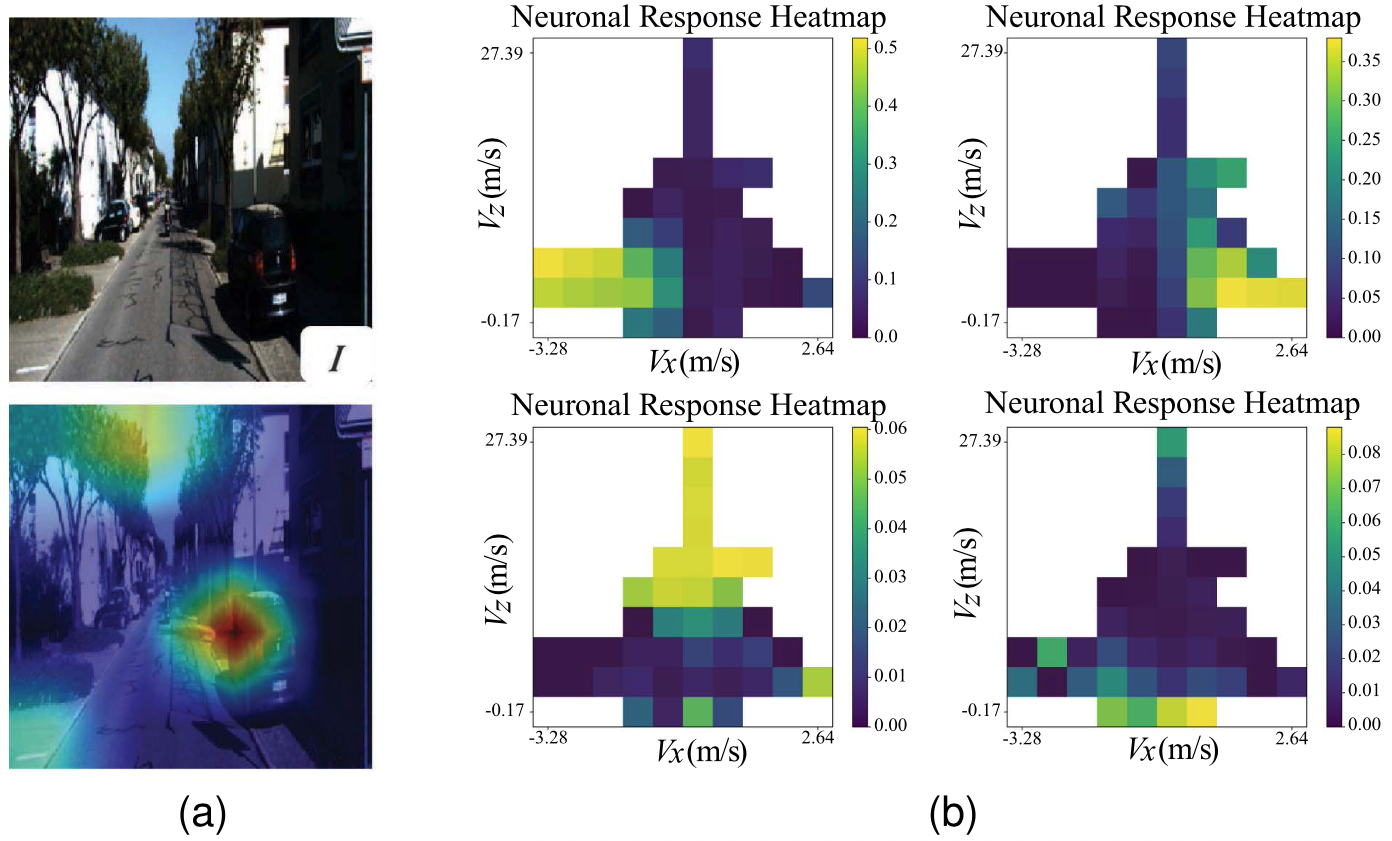
Chang Xu, Taiping Zeng, Yifan Luo, Fei Song, Bailu Si
Cite:
Spatiotemporal Dual-Stream Network for Visual Odometry
@ARTICLE{10897744,
  author={Xu, Chang and Zeng, Taiping and Luo, Yifan and Song, Fei and Si, Bailu},
  journal={IEEE Robotics and Automation Letters},
  title={Spatiotemporal Dual-Stream Network for Visual Odometry},
  year={2025},
  volume={10},
  number={4},
  pages={3867-3874},
  keywords={Feature extraction;Visualization;Correlation;Transformers;Spatiotemporal phenomena;Pose estimation;Data mining;Visual odometry;Deep learning;Odometry;Monocular visual odometry;dual-stream network;deep learning},
  doi={10.1109/LRA.2025.3544521}}
Academic Experience
My academic journey has been deeply shaped by interdisciplinary training across computation, cognition, and systems science, inspiring my long-term interest in understanding spatial representation and intelligent planning from both 🧠 biological and 💻 algorithmic perspectives .
- [2016.09 – 2017.06] 🎓 Graduate coursework in Master's and Ph.D. programs at University of Science and Technology of China (USTC), Hefei, Anhui, China. The training provided a solid foundation in mathematics, signal processing, and artificial intelligence theories as part of my early academic preparation.
- [2017.07 – 2018.06] 🐭 Research exchange at the Institute of Brain Science, Shenzhen Institute of Advanced Technology (SIAT), CAS, Shenzhen, China. I gained hands-on experience in neurophysiology experiments, neural data analysis, and hippocampal spatial representation studies.
- [2021.03 – 2021.10] 💻 Research collaboration at the Peng Cheng Laboratory (PCL), Shenzhen, China. I worked on large-scale brain-area computational modeling and reinforcement-learning-based simulated navigation frameworks.
- [2019 – 2025] 🤖 Academic training and research at the School of Systems Science, Beijing Normal University (BNU), Beijing, China. This period formed the core of my doctoral research, focusing on hippocampal computation, spatial representation, and biologically inspired navigation modeling.